
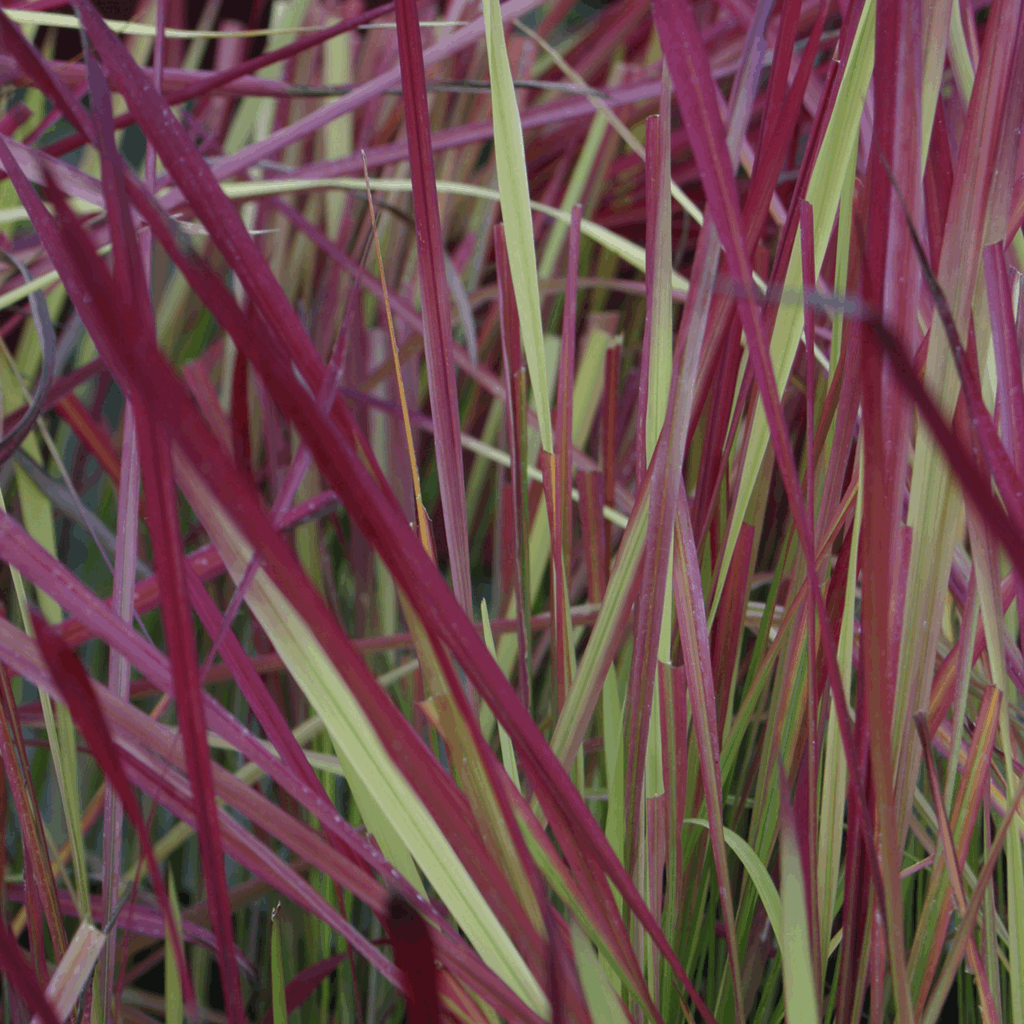
Red Baron Japanese Blood Grass (Imperata cylindrica ‘‘Red Baron’’) forms a compact clump of upright blades tipped in vivid red, deepening to rich crimson as temperatures warm. Non-invasive and well-behaved, it’s perfect for adding color contrast to borders, mixed plantings, and containers. Low maintenance, deer resistant, and happy in full sun, Red Baron provides bold texture and season-long interest without spreading aggressively like other Imperata types.
Care & Growing Guide
Ornamental grasses are grown for line, texture, movement, seasonal seed heads, and architectural structure rather than traditional showy flowers. Buyers often choose them to add contrast and softness to mixed plantings, but their best use depends on growth habit, season of interest, and how much moisture and sun the site actually provides.
Many ornamental grasses perform best in full sun, where they grow denser and flower better. Some sedges and certain grasses tolerate shade, but category care should always be plant-specific.
A wide range exists. Some grasses are drought tolerant once established, while others want more moisture. Product-page tags for dry, average, or moist soils are especially useful here.
Many ornamental grasses are cut back before spring growth resumes. Buyers should also know whether a selection is prized for winter persistence, because cutting too early removes part of its landscape value.
Many are, but they are not maintenance-free. Annual cutback, occasional division, and correct spacing still matter.
Some do, but full-sun grasses often thin out in lower light. Shade-tolerant sedges and selected grasses are better choices there.